SEASON TWO
Pandemic
As the world responded to the COVID-19 pandemic lockdowns in 2020, the On Spec team continued reporting stories from where ever they were. Though the lockdowns made them feel isolated from the world, in many ways people were finding ways to come together.
Season 2 of On Spec takes you to Spain, Kashmir, the US, Turkey, Canada, Lebanon, Tunisia, Cyprus, Mexico, Hong Kong, Poland, where people share their experiences of religious faith, mental health, food, illness, incarceration, and family life.
ATTENTION: If you are seeing a “Preview” badge in the podcast player, you can click on “On Spec Podcast” next to it to listen to the full episodes on Spotify.
SEASON TWO’S HOST
Fariba Nawa
“Interviewing people in crises in the field gives me a sense of purpose, a connection to traumatized communities I know too well. I was born to share real life stories — mine and theirs.”
Fariba Nawa has been covering global news for 25 years from places like Afghanistan, Egypt, Iran, Pakistan and now Turkey. She is also a speaker and author of the book Opium Nation: Child Brides, Drug Lords and One Woman’s Journey through Afghanistan. A native Afghan, Fariba’s fluent in Farsi/Dari and can get by in Arabic and Turkish. Some recent work can be found in The World, Time, The Christian Science Monitor, The New Yorker, and The Financial Times.
Take a deep dive into the episodes below
What has quarantine been like for children during the pandemic? Are they finding their creative little selves and building stronger family ties? Or turning into online zombies and losing their social skills? Or are they becoming child laborers to help their families survive? It depends on the kids and the country. On Spec host Fariba Nawa takes you inside her home in Turkey with her daughters, and then to Malawi, where they get to know a teenage girl whose life changed drastically when her school closed because of the pandemic.
With families in lockdown, and social services unavailable, experts say domestic violence is increasing, and being ignored during the coronavirus outbreak. Menel Raach talks to a woman in Iraq who is trying to find a safe place to live amid the lockdowns there, and to lawyers and experts about what is being called a "shadow pandemic" of domestic violence.
You probably know someone who has discovered their inner chef in the last few months. In New York, photographer Jackson Krule discovered he was a baker. Unable to go out and photograph the Orthodox Jewish community he has been documenting, he started baking challah bread at home and posting photos online. Now it's turned into a business that delivers all over the country. Alisa Reznick brings you that tale, and her own story of learning her family's recipes during the pandemic in Arizona.
How is being on lock down effecting our mental health, and how are mental health professionals trying to continue to provide help when they cannot meet someone in person? On Spec intern and journalist Kasper Dilmaghani talks to therapists and one woman who opens up about her depression. Here is the story on how the pandemic is effecting our mental health, from Tunisia, Mexico, Poland, Hong Kong and the U.S.
What if you don't have control over your own self-isolation? More than two million people are in prisons in the US, which has the highest incarceration rate in the world. Oscar Durand speaks with Efrén Paredes, Jr about the prison where he is incarcerated serving a life sentence for a robbery and murder committed when was 15 years old. He maintains his innocence. In 2012, the US Supreme Court ruled life sentences without parole for minors were unconstitutional, and Efrén has been awaiting a re sentencing since then. Of the 1,400 incarcerated with him in Michigan's Lakeland Correctional Facility, more than 700 have tested positive for COVID-19, and at least 12 have died.
Whether you live across the street, or across the Atlantic, for many of us social distancing now means you cannot meet in person. Your family, your friends, that person you wanted to date...everything is on hold. But across the world we are finding new ways of bridging the distances. Margaux Benn and Menel Raach bring you stories from Canada, Lebanon, Cyprus, and Tunisia, on how we are keeping from getting lonely, even when we are alone.
What's it like to have COVID19 in Turkey? Hilaneh Mahmoudi, a freelance photographer in Istanbul, spent weeks trying to not catch it, but one day the tell tale symptoms began. This is her audio diary, told to host Fariba Nawa, of what it's like to have the virus, and the struggle to keep those living with you safe from it as well. See the accompanying photographs here.
You might think you're further away from the world, but in many ways the pandemic is bringing us together. We begin with the religious, those who turn to faith and collective prayer in times of hardship. But they are not supposed to gather anymore in mosques, churches or synagogues. The entire concept of communal support in faith has been upended. Many groups are still resisting and continue to gather. But slowly, the choice is no longer available. It’s your life or place of worship. Journalist Umar Farooq talks to three people in Spain, Kashmir and the U.S., and how religious communities are finding ways to support each other without being together.
Behind the Scenes & Collaborations
In this collaboration with the Continuum Collective, we are exploring the rise in gender-based violence during the pandemic and what can be done about it. On Spec's host Fariba Nawa joins Jillian Foster, the host of the Continuum Collective's Radicals & Revolutionaries Lab podcast, and Teri Yuan, the host of the Engendered podcast.
Season Two Contributors
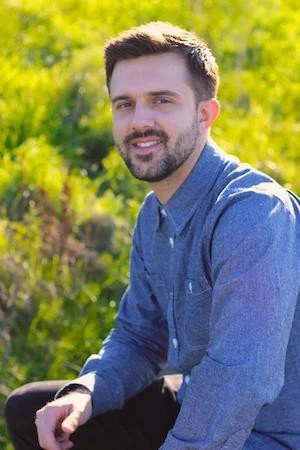
Alisa Zaira Reznick is a journalist and photographer from Flagstaff, Arizona. After several years in Amman, Jordan she returned to Arizona to document migration, human rights and the environment from a new border. Her work has appeared in Al Jazeera, Mother Jones, NPR, PRX’s The World and the BBC, among others. She currently covers border and immigration issues for Tucson’s NPR affiliate, Arizona Public Media.
A physicist turned journalist, Umar’s reporting includes breaking news and investigative features, spanning four continents. He is a recipient of grants from the Pulitzer Center for Crisis Reporting and the National Geographic Society. He has been a correspondent for The Los Angeles Times, Reuters, and Al Jazeera English, reporting from the Middle East and South Asia, and a national investigative reporter with ProPublica. His work has also appeared in Foreign Affairs, Foreign Policy, the Atlantic, the Nation, the Intercept, National Geographic, the Wall Street Journal, and the Christian Science Monitor. Born in Pakistan and raised in New Orleans, he is fluent in Urdu and can do pretty well in Arabic and Turkish.
A former engineer, Oscar is a visual journalist who has covered the global refugee crisis from Africa, Latin America and the Middle East.He has been published in NBC News, the Finnish Broadcasting Company, PRI’s The World, Catholic News Service, The Guardian, Ozy, National Geographic Traveler, and other outlets. Among other projects, Oscar is currently working on a National Geographic Explorer’s Grant with Umar to tell the stories of Afghanistan’s refugees. He’s fluent in Spanish, and conversational in French and Turkish.
Margaux is a French and Canadian multimedia journalist. She has been based in Paris, Sudan, Kenya and the Central African Republic. In the beginning of 2018, after two years as a video editor with AFP’s Middle-East and North Africa bureau in Cyprus, she left her desk job to settle in Afghanistan as a freelancer. She is a correspondent for Le Figaro; the TV networks France 24 and Arte; and the French radio Europe 1 — and occasionally files for other media. Her work has appeared in The New York Times, The Guardian, Al-Jazeera, Foreign Policy, Le Figaro, Le Temps and others.
Fariba Nawa has been covering global news for 25 years from places like Afghanistan, Egypt, Iran, Pakistan and now Turkey. She is also a speaker and author of the book Opium Nation: Child Brides, Drug Lords and One Woman’s Journey through Afghanistan. A native Afghan, Fariba’s fluent in Farsi/Dari and can get by in Arabic and Turkish. Some recent work can be found in The World, Time, The Christian Science Monitor, The New Yorker, and The Financial Times.
Menel is a journalist and filmmaker from Tunisia and currently a student at Laney studying multimedia. She is passionate about social change through storytelling. She started her career as a reporter for Tunisian Tv and radio channels. She wrote and shot a short movie The Stranger about violence against children. Menel speaks Arabic and French.
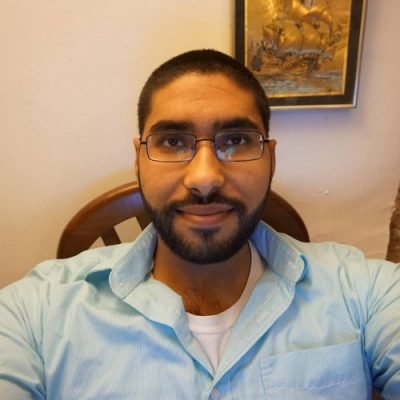
Kasper is studying communication and journalism at Laney College where he is a staff writer and copy editor for the college district’s newspaper The Citizen. Based in Oakland, California and originally from neighboring Berkeley, Kasper is interested in covering stories about gentrification, marginalized communities and the environment. Kasper is of Polish and Persian descent, speaking fluent Polish as well as some Farsi.